.webp)
A rotary creasing machine forms fold lines with a rotating crease wheel as the sheet moves. It is built for clean, repeatable folds on card and board — especially straight parallel creases on brochures and covers.
This guide from Skycut India explains rotary creasing, how it differs from platen and digital XY creasing, and when a dual-head plotter is the better buy. General crease buying is in creasing machine. Fold-plus-outline jobs are in crease and cut.
Quick answer
What rotary creasing is
“Rotary” means the crease tool turns. A wheel or rotary rule presses fibres into a channel while the sheet or web advances. The fold opens on that channel without slicing the sheet the way a cutting blade would.
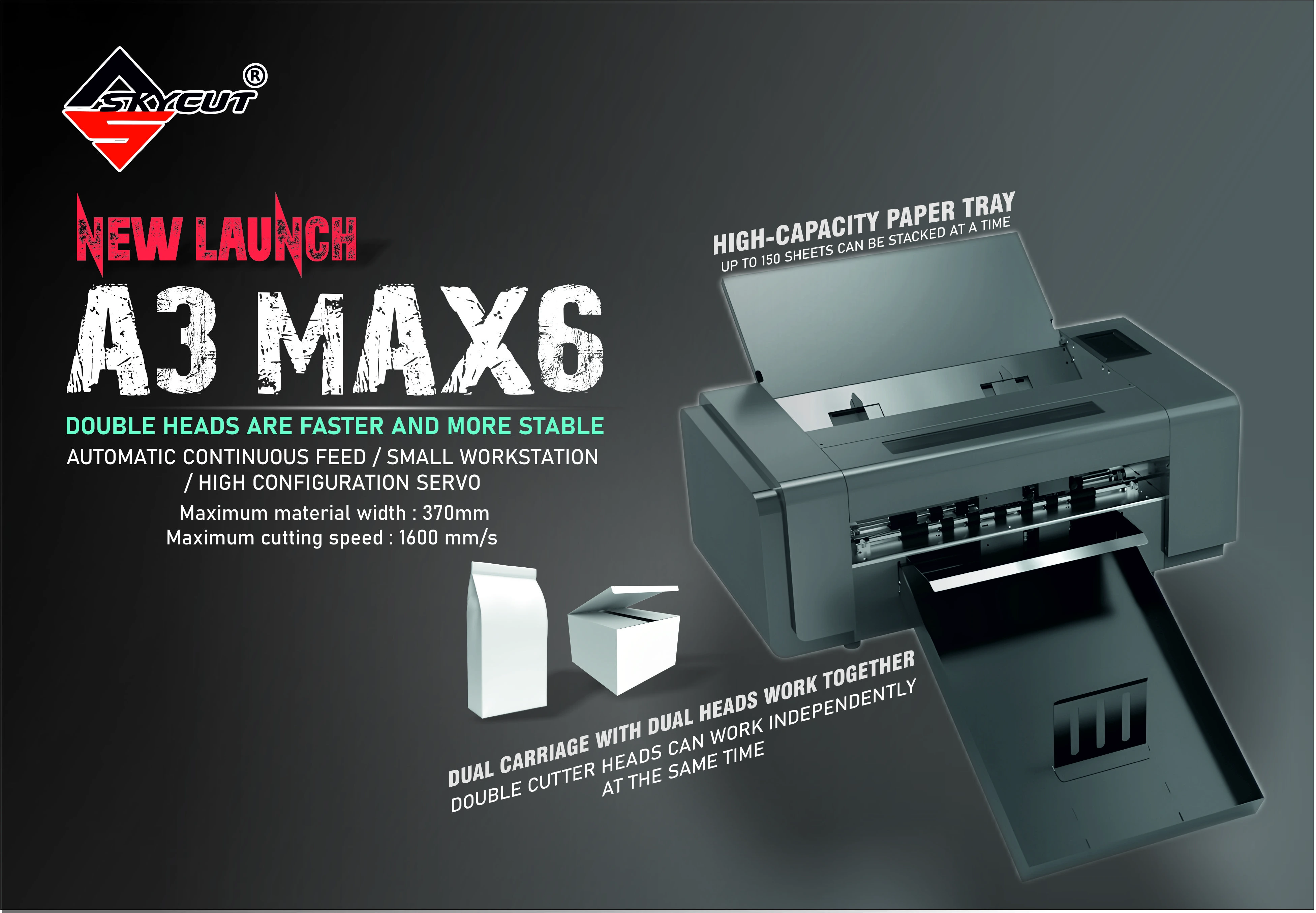
On digital plotters, the crease tool is often a small rotary wheel on a carriage that follows X/Y paths from a file. That is still rotary creasing mechanically — but the machine class is a cut-and-crease plotter, not a dedicated straight-line rotary unit.
vs platen & digital XY
| Rotary creasing machine | Platen / bar creaser | Digital XY cut & crease | |
|---|---|---|---|
| Motion | Wheel rolls along the fold | Bar presses a full line | Carriage follows file paths |
| Shapes | Usually straight / parallel | Straight lines | Any crease path + cut outline |
| Best volume | Long runs of same fold | Short to mid straight folds | Short runs, changing designs |
| Skycut role | Advise path; enquire for fit | Advise path | A3 Max 5 / D / F Series |
When rotary wins
- Brochure and booklet covers with the same fold spacing all day.
- Greeting-card blanks that only need a centre crease, no fancy outline.
- High metre / sheet counts where a dedicated creaser outruns tool-changing plotters.
- Simple packaging sleeves with only parallel folds — until you add windows or shaped flaps.
Need rotary-style creasing for cards or cartons?
Tell us straight folds only or shapes + folds. We will suggest A3 Max 5, D Series or flatbed and share the price.
How to choose
Match the fold job
Straight parallel folds vs shaped cards and cartons that also need cutting.
Pick rotary line or digital XY
Dedicated rotary for volume straight creases; dual-head plotter for cut + crease shapes.
Set wheel / crease force on scrap
Fold must channel cleanly without cracking print or tearing through.
Keep crease paths separate on digital jobs
Fold lines never go to the cutting blade as full cuts.
Run production and re-test on new board
Change stock, re-dial pressure before the live stack.
.webp)
Where Skycut fits
| Job | Skycut path |
|---|---|
| Invitations / small cartons, cut + crease | A3 Max 5 |
| Wider / thicker dual-head blanks | D24 / D48 |
| Rigid board that must stay flat | F6090 / F4560 |
| Dedicated high-volume straight rotary only | Specialist creaser class – enquire for advice |
Dual-head detail is in dual head. Scoring language is in scoring machine. Call +91 9990391515 or send an enquiry. We do not invent rupee stickers online.
Mistakes to avoid
| Mistake | Better approach |
|---|---|
| Buying only a rotary creaser for die-cut cartons | Add digital cut-and-crease for outlines |
| Using a V24 for card folds | V24 is vinyl – not a creaser |
| Sending folds as full cuts on a plotter | Assign crease paths to the crease tool |
| No scrap test on new board | Dial wheel / force before the live job |
Frequently asked questions
Final thoughts
A rotary creasing machine rolls fold channels for clean bends — ideal for straight, high-volume creases. When blanks also need cutting, use Skycut A3 Max 5, D Series or a flatbed with a crease tool. Start with creasing machine for general buying, and crease and cut for the dual-tool workflow.
.webp)