.webp)
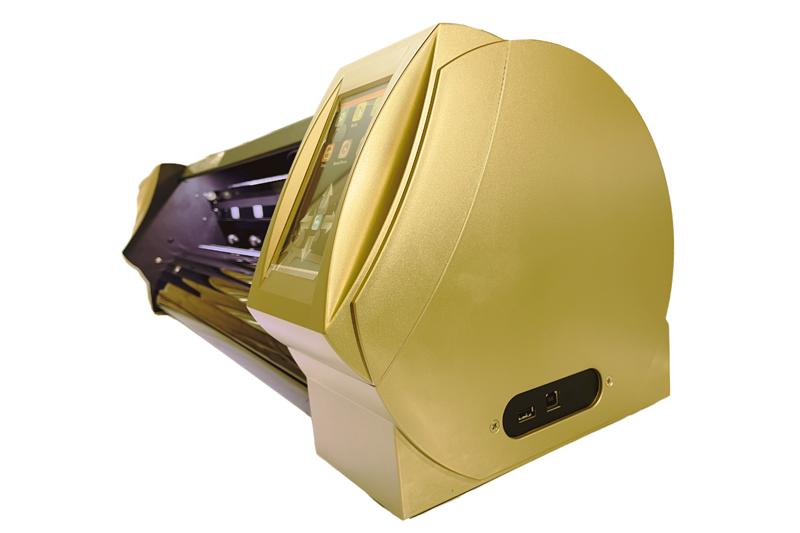
Ask any sticker or sign shop what tool they use most with their film, and the answer is a vinyl machine – a cutting plotter that turns colourful adhesive vinyl into shop names, bike stickers, wall decals and vehicle graphics every day.
In this guide, Skycut India explains what a vinyl machine does, how vinyl film is built, the main types used in cutting and signage, how to choose the right roll for each job, and which Skycut model works best for different materials.
Quick answer
- A vinyl machine cuts self-adhesive film (coloured face, adhesive and peel-off liner) for signage and stickers.
- Common types: calendared sign vinyl, cast vinyl, radium, HTV, printable vinyl and specialty films.
- Outdoor work: use outdoor-grade vinyl or radium; indoor work can use lighter vinyl.
- Starter vinyl machine: Skycut V24 or production VH Series.
What is a vinyl machine?
A vinyl machine is a vinyl cutter / cutting plotter that cuts self-adhesive PVC film sold in rolls. You cut letters and shapes, peel away the waste (weeding), and stick the design onto a surface with transfer tape. In shops, “vinyl machine” and “vinyl cutter” usually mean the same equipment.
Vinyl film is popular because it comes in many colours, lasts outdoors when you choose the right grade, cuts cleanly on a vinyl machine and does not need printing for solid-colour graphics. Full-colour photo stickers use printable vinyl instead, which is printed first and then contour cut on a camera model.
How vinyl is built
Most adhesive vinyl has three layers:
A vinyl cutter is set so the blade cuts through the face and adhesive only. If the blade is too deep, it cuts the liner and makes weeding and application harder.
Types of vinyl for a vinyl machine
Calendared / sign vinyl
The everyday vinyl for shop lettering, stickers and flat surfaces. Affordable and available in many colours.
Cast vinyl
Thinner and more flexible premium vinyl for curves, vehicle wraps and long outdoor life.
Radium / reflective film
Shines under headlights at night. Used for bike, car, truck and safety stickers. Thicker and tougher to cut.
Heat-transfer vinyl (HTV)
Applied to fabric with heat. Used for T-shirts, uniforms, bags and sports kits.
Printable vinyl
White or clear film that you print on, then contour cut with a camera plotter for full-colour stickers.
Frosted & specialty vinyl
Frosted window film, glitter, metallic, fluorescent and other films for premium or decorative work.
Indoor vs outdoor vinyl
| Factor | Indoor vinyl | Outdoor vinyl |
|---|---|---|
| Weather resistance | Low | UV and rain resistant |
| Typical life | Short to medium | Longer (depends on brand & grade) |
| Best for | Wall decals, temporary graphics, indoor signs | Shop boards, vehicles, outdoor lettering |
| Price | Usually lower | Usually higher |
| Cutting | Easy on any vinyl cutter | Easy; radium needs more force |
Using indoor vinyl outdoors is a common mistake – colours fade and edges lift. Match the vinyl grade to where the graphic will live.
How to choose the right vinyl
Where it will be used
Indoor wall? Outdoor board? Vehicle body? Choose indoor, outdoor or reflective accordingly.
How long it must last
Short event graphics can use cheaper film; long-term branding needs outdoor or cast vinyl.
Surface shape
Flat glass and boards suit calendared vinyl; curves and vehicle bodies favour cast vinyl.
Colour & finish
Pick gloss, matte, metallic or frosted based on the look your customer wants.
Adhesive type
Permanent for long-term signs; removable for temporary promotions and rentals.
Cutting difficulty
Thick radium and glitter films need a sharper blade, more force and slower speed.
| Your job | Recommended vinyl |
|---|---|
| Shop names & glass lettering | Outdoor calendared vinyl |
| Bike & car radium stickers | Engineering-grade reflective film |
| Vehicle wraps & curves | Cast vinyl |
| T-shirts & uniforms | Heat-transfer vinyl (HTV) |
| Full-colour product stickers | Printable vinyl + contour cutting |
| Office privacy glass | Frosted window vinyl |
Need a vinyl machine that cuts cleanly?
Tell us which vinyl you use most – sign vinyl, radium, HTV or printable – and we’ll recommend the right Skycut vinyl machine.
Cutting vinyl on a vinyl machine
Vinyl is cut on a vinyl cutter machine / vinyl machine. The basic settings that decide cut quality are:
- Blade angle: 45° for standard vinyl and HTV; 60° for thick radium and specialty films.
- Blade depth: expose just enough blade to cut the face and adhesive, not the liner.
- Force: start low and increase until the test cut weeds cleanly.
- Speed: slow down for small text, thick film and glitter vinyl.
For the full process from design to application, see our vinyl cutting guide. For radium specifically, read the best cutting plotter for radium stickers.
.webp)
Vinyl application tips
- Clean the surface with isopropyl alcohol so dust and oil do not stop the adhesive bonding.
- Use the right transfer tape – standard tape for smooth vinyl, higher tack for textured or reflective film.
- Squeegee from the centre outwards to push out air bubbles.
- Avoid wet or dusty weather when applying outdoor vinyl to vehicles and boards.
- Burnish firmly after removing the liner so edges do not lift.
- Wait before washing vehicles after applying vinyl or radium, so the adhesive can set.
Skycut vinyl machines
| Vinyl work | Recommended vinyl machine |
|---|---|
| Everyday sign vinyl, stickers, HTV | Skycut V24 |
| All-day vinyl & radium production | Skycut VH-24 / VH-48 |
| Printed vinyl stickers & labels | Skycut C24 / CX24 |
| Thick reflective film & wide jobs | Skycut D24 / D48 |
For prices and budget tiers, see vinyl cutting machine price in India.
Frequently asked questions
Final thoughts
A vinyl machine is the core tool of the sticker and signage trade – but not all vinyl film is the same. Choose the right grade for indoor or outdoor use, match the film to the surface, and cut it with the correct blade and force. Pair good vinyl with a Skycut V24, VH Series or C Series, and you can deliver clean, durable graphics every day.